














Looking for Car Insurance in Canada? Great deals are a click away
Types of Car Insurance Coverage in Canada
From mandatory protection to optional add-ons, here’s what you need to know about the different types of auto insurance available in Ontario and how they help keep you and your vehicle covered.
Mandatory Car Insurance Coverage
In Ontario, drivers are legally required to carry basic auto insurance. It includes third-party liability, accident benefits, uninsured driver protection, and coverage for damage to your car when you're not at fault. This ensures financial protection for you and others in the event of an accident.
01.
3rd Party Liability Coverage
Covers you if you’re legally responsible for injuring someone or damaging their property in a collision.
- Minimum coverage required: $200,000 (many drivers opt for $1–2 million)
- Pays for legal expenses, settlements, and property repair or medical costs
- Essential if you’re sued after an at-fault accident
02.
Accident Benefits
Provides compensation if you or your passengers are injured in a car accident — regardless of who’s at fault.
- Covers medical care, rehab, and recovery support
- Offers income replacement if you're unable to work
- May include caregiver, attendant care, and funeral benefits
- Optional upgrades available for higher coverage limits
03.
Uninsured Automobile Coverage
Protects you and your passengers if you're injured in an accident caused by a driver without insurance, a hit-and-run driver, or someone operating a stolen or unregistered vehicle. It ensures you're covered when the at-fault driver can't be held financially responsible.
- Covers injuries or death to you and your passengers
- Covers vehicle damage (up to limits) caused by uninsured drivers
- Provides peace of mind if the other driver has no insurance
Standard Car Insurance Coverage
Optional car insurance in Ontario provides added protection beyond the mandatory coverage. It includes options like Collision, Comprehensive, All Perils, and Specified Perils, helping cover damage to your vehicle from accidents, theft, weather, and other risks.
01.
Direct Compensation Property Damage
DCPD is a mandatory part of car insurance in Ontario. It covers damage to your vehicle and its contents when you're not at fault in an accident — as long as the other driver is insured and the collision happens in Ontario. Despite the name, you deal directly with your own insurer to get compensation, which makes the process faster and simpler.
- Covers repairs or replacement of your vehicle when you're not at fault
- Includes damage to contents inside the vehicle
- Pays for loss of use (like rental car costs) if your vehicle can't be driven
- Only applies if the other driver is insured and the accident occurs in Ontario
- Claims are handled directly through your own insurance company for faster resolution
02.
Specified Perils
Specified Perils is an optional auto insurance coverage that protects your vehicle against only the risks specifically listed in your policy. It offers a more limited (but lower-cost) alternative to Comprehensive coverage, covering events like fire, theft, and certain natural disasters. It's ideal for drivers looking to save on premiums while still protecting against select major threats. Covers only the named risks in your policy (no broad protection):
- Fire or explosion
- Theft or attempted theft
- Lightning, hail, or windstorms
- Rising water, flooding, or earthquakes,
- Falling or flying objects
- Riots or civil disturbances
- Damage during transport (like by train or boat)
- Best for vehicles where full coverage isn't needed but some protection is still wanted
03.
Comprehensive Coverage
Comprehensive coverage is an optional insurance protection that covers damage to your vehicle caused by events other than collisions. This includes incidents like theft, vandalism, fire, natural disasters, and animal collisions. It helps protect your car from unexpected risks that aren’t covered by standard liability or collision insurance, giving you broader peace of mind.
- Covers damage from theft or attempted theft of your vehicle
- Protects against vandalism and malicious damage
- Pays for damages caused by fire, explosion, or natural disasters (e.g., hail, floods)
- Includes damage from falling objects, such as tree branches or debris
- Covers animal collisions, like hitting a deer or other wildlife
- Protects windshield and glass damage in many cases
- Often bundled with collision coverage for full vehicle protectionv
04.
Collision or Upset
Collision or Upset coverage is optional car insurance that pays to repair or replace your vehicle if it's damaged in an accident involving another car, an object, or a rollover — even if you're at fault. It's an important add-on for drivers who want full protection for their own vehicle.
- Covers damage from collisions with other vehicles, objects, or rollovers
- Applies even if you're at fault in the accident
- Includes hit-and-run incidents
- Repairs or replaces your vehicle based on its actual cash value
- Often required if your vehicle is leased or financed
05.
All Perils
All Perils coverage is the most comprehensive optional coverage you can add to your Ontario auto insurance policy. It combines the protection of Collision and Comprehensive coverage, while also protecting against additional risks like theft by someone you know (e.g., a household member or employee). It offers the broadest protection available, making it ideal for drivers who want maximum peace of mind.
- Combines both Collision and Comprehensive coverage
- Covers at-fault and not-at-fault collisions
- Includes protection against theft or damage caused by someone you live with or hire (e.g., employee or mechanic)
- Offers the broadest protection available in Ontario auto insurance
Optional Car Insurance Coverage
These are add-ons to your auto insurance policy that customize your coverage. They let you enhance, reduce, or clarify what’s protected—like adding rental coverage, waiving depreciation, or insuring a secondary driver. These endorsements help tailor your policy to fit your specific needs. There are actually over 48 of them we will list the most common ones:
01.
Accident Forgiveness
If you have a clean driving record, this endorsement ensures your first at-fault accident won’t result in a premium increase—as long as you stay with the same insurer. Benefits:
- No rate hike after first at-fault accident
- Helps protect your driving record
- Great incentive for safe drivers
02.
New Car Protection
This coverage ensures that if your new vehicle is stolen or written off in an accident, you’ll be reimbursed based on the original purchase price—not the depreciated value. It typically applies to new cars for the first 2–3 years.
- Full replacement value for new cars
- No depreciation deduction
- Ideal for vehicles less than 2–3 years old
03.
Family Protection Coverage
Protects you and your family if you're injured by a driver who is uninsured, underinsured, or unidentified. It ensures you can recover the same amount you’re insured for, even if the other driver doesn’t carry enough coverage.
- Covers injuries from underinsured drivers
- Protects all family members in the household
- Matches your policy’s liability limit
04.
Loss of Use
If your car is out of service after an insured event like a collision or theft, this endorsement pays for alternative transportation like a rental car, taxi, rideshare, or transit while yours is being repaired or replaced.
- Stay mobile during repairs
- Covers rental cars or transit costs
- Reduces out-of-pocket inconvenience
Factors That Determine Your Car Insurance Rates in Toronto
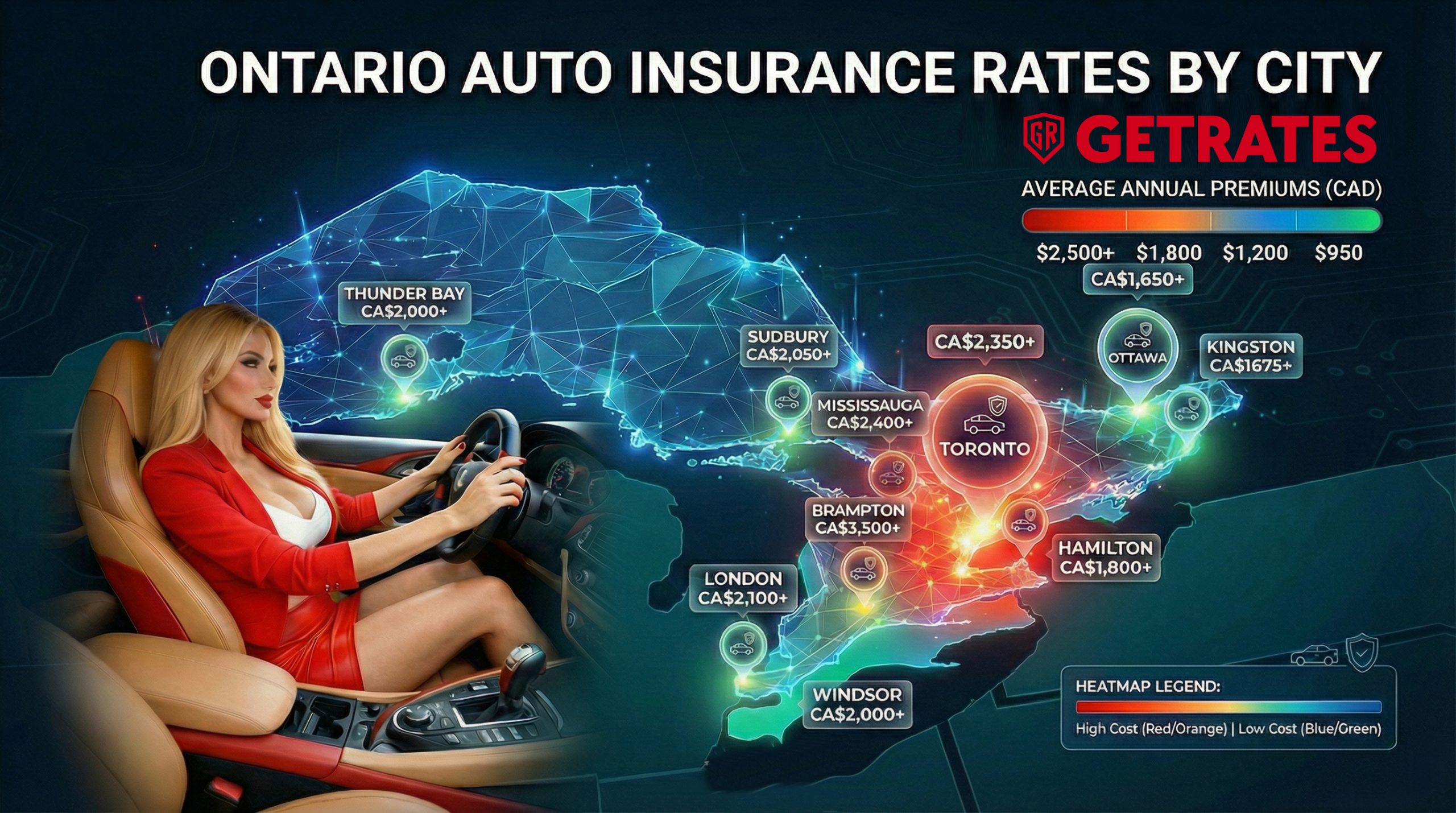
Car insurance rates in Toronto are among the highest in Canada, and premiums are influenced by a combination of individual driver details and broader city-wide factors. Insurers use these factors to assess the likelihood of you making a claim and the potential cost of that claim
Frequently asked questions (FAQs) about Car Insurance
Car insurance rates in Toronto are among the highest in Canada, and premiums are influenced by a combination of individual driver details and broader city-wide factors. Insurers use these factors to assess the likelihood of you making a claim and the potential cost of that claim
Car insurance rates in Toronto are influenced by several factors. The city's high population density leads to more traffic and, consequently, more accidents. High rates of vehicle theft, vandalism, and insurance fraud in some urban areas also contribute to higher premiums. Insurers use your postal code to assess these risks, which is why rates vary significantly even within the city.
In Ontario, if you lend your car, you are also lending your insurance. If your friend gets into an at-fault accident while driving your vehicle, your insurance policy is the one that will be used, and it could cause your premium to increase. It's crucial that any regular drivers of your vehicle are listed on your policy.
If you are found to be at-fault for an accident, it will be recorded on your insurance record and will likely cause your premium to increase upon renewal. The level of increase depends on the severity of the accident, your claims history, and whether you have "Accident Forgiveness" coverage. In Ontario, fault is determined by your insurer based on the Fault Determination Rules set out in the provincial Insurance Act.
Yes, most driving convictions, including speeding tickets, will impact your insurance rates. Insurers consider tickets a sign of risky driving behavior. The severity of the increase depends on the type of offense, with more serious violations leading to a larger premium hike. Tickets typically stay on your driving record and affect your insurance for a minimum of three years from the conviction date.
The first step is to stay calm and ensure everyone is safe. If anyone is injured, or if the total damage appears to be over $2,000, call the police immediately. If no one is injured and the damage is minor, you must exchange information with the other driver(s), including names, addresses, phone numbers, driver's license numbers, and insurance details. You must also report the accident to your own insurance company as soon as possible, ideally within 24 hours.
A lapse in insurance is a gap where a driver didn't have valid coverage. This can happen if you cancel your policy and don't immediately get a new one, or if your policy is cancelled for non-payment. Insurers view a lapse as a major risk factor, and it will almost certainly lead to much higher premiums when you try to get a new policy. In some cases, a long lapse can even make it difficult to find an insurer willing to cover you.
Yes, you are required to add any licensed household members who will be regularly driving your car to your policy. Failing to do so is considered misrepresentation and can lead to a claim being denied or your policy being cancelled. It is best to inform your insurer as soon as a child gets their G2 license.
Your standard personal car insurance policy does not cover commercial activities like rideshare or food delivery. Using your vehicle for these purposes without proper coverage can result in a claim being denied. You must inform your insurer about this use, as you will likely need to add a specific endorsement or purchase a commercial auto insurance policy.
Car Insurance Tips and Tricks
Catch up on the latest news and information on car insurance.